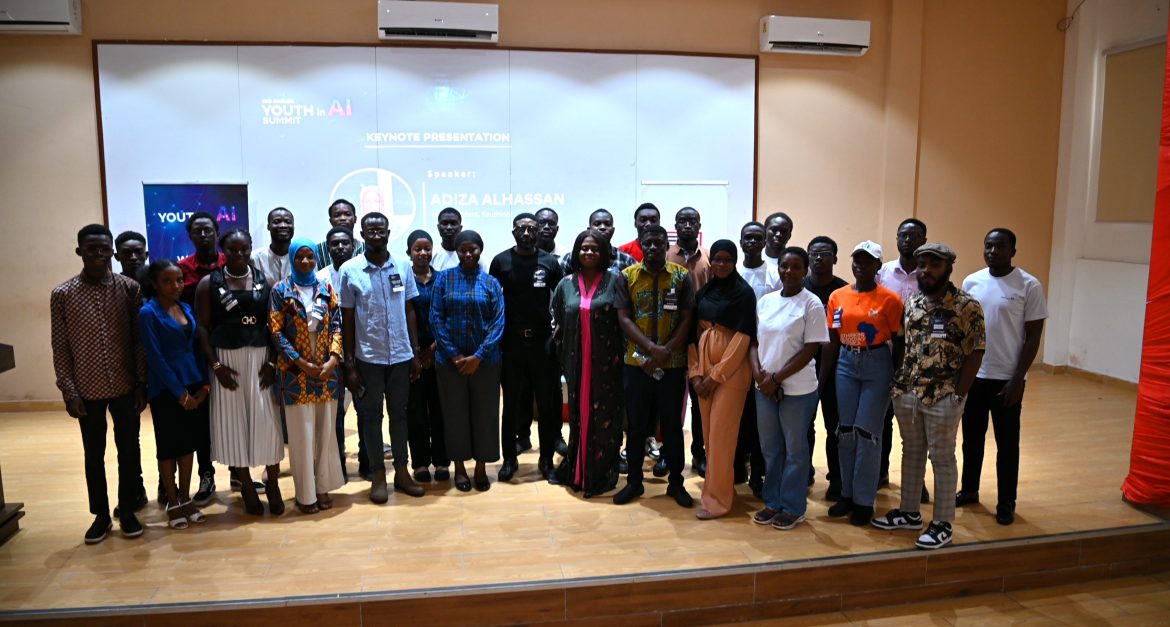
The 2025 Youth in AI Summit, held on 29 November, convened young innovators, educators, policymakers, development partners, and technology leaders to explore how artificial intelligence can drive meaningful change in Ghana. Under the theme “AI for a Sustainable Future: Empowering Youth to Drive Global Impact,” the gathering challenged participants to move beyond hype and focus on solutions that create real, measurable impact.
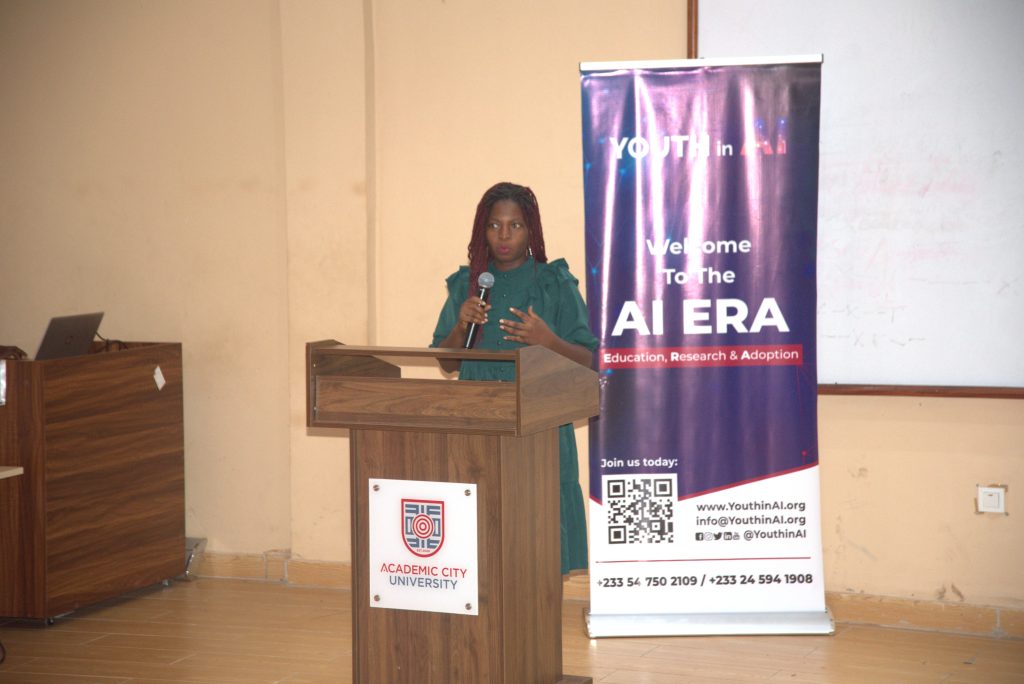
Florence Toffa, Director of Mobile Web Ghana, delivered one of the day’s most memorable keynote addresses. Drawing from Ghana’s digital evolution, she reminded the audience how far the country has come. She recalled a period when “even checking your bank balance meant standing in a long queue,” contrasting it with today’s landscape of mobile banking, digital services, and AI‑powered tools. Her point was simple: Ghana has made remarkable progress — but the next leap depends on the choices young people make today.
Throughout her address, She stressed that opportunity alone does not guarantee impact. With AI tools becoming more accessible, she cautioned that progress requires intention and discipline. “We must become creators rather than only consumers,” she said, urging young people to decide what they want to build and pursue it with courage and consistency. She encouraged them to keep learning, experimenting, and refining their ideas, even when the journey becomes difficult.
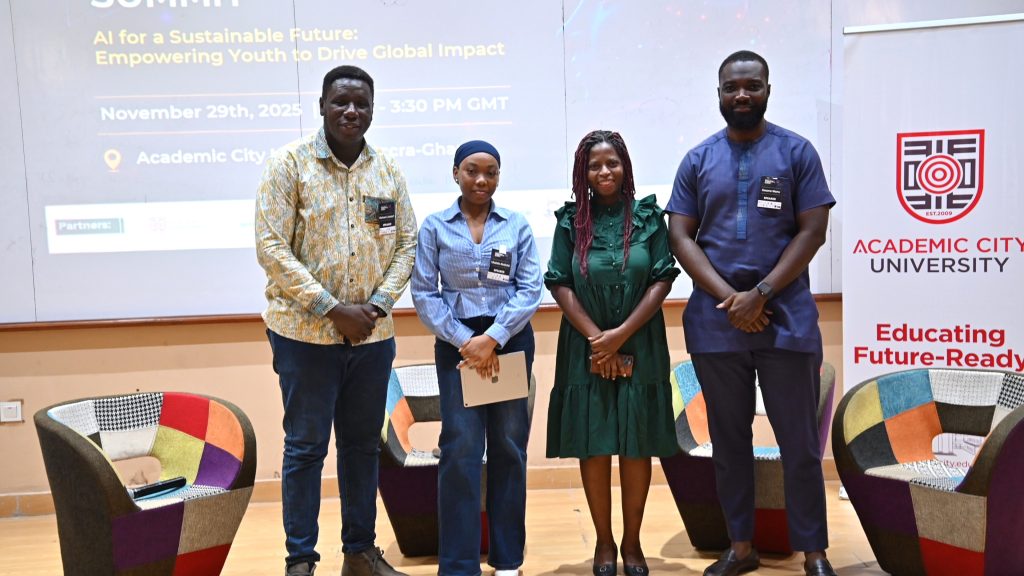
She also emphasized the importance of grounding innovation in Ghana’s real needs. She pointed to challenges in food security, healthcare, transportation, and recruitment systems as areas where AI can make a tangible difference. She urged young innovators to design solutions that work for everyday people, including those who speak local languages, noting that technology becomes powerful only when it is accessible and inclusive. She further called on government and policymakers to invest in digital skills development to ensure that more young people can participate meaningfully in the country’s growing tech ecosystem.
Beyond her keynote, Florence joined a panel discussion alongside other industry leaders, where she expanded on the role of youth in shaping Ghana’s AI future. The conversation explored responsible innovation, the importance of mentorship, and the need for stronger collaboration between institutions, private sector actors, and young creators.
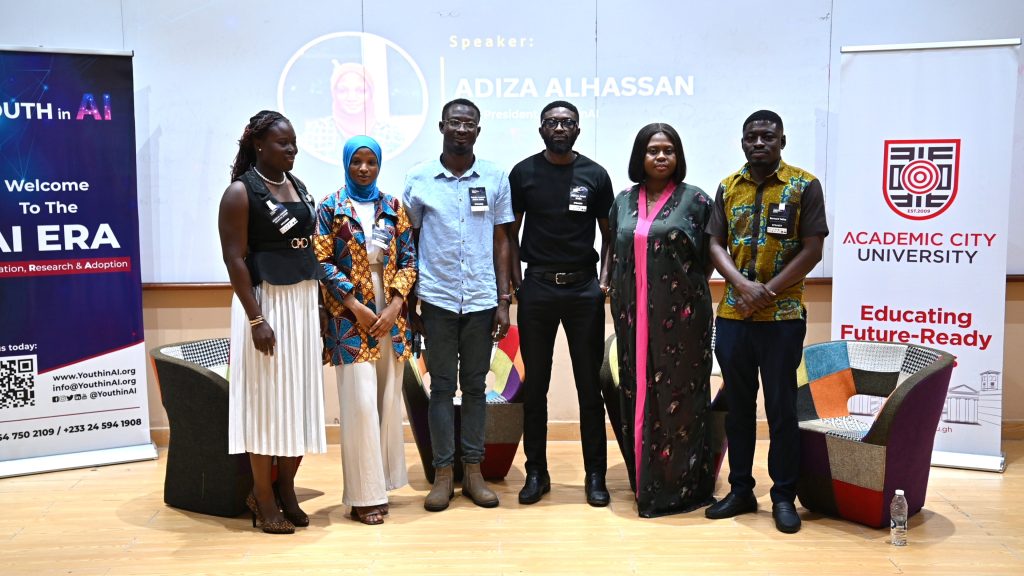
Her message throughout the summit was consistent and compelling: Ghana’s sustainable AI future will not be defined by global trends but by the intentional actions of its young people. She closed with a call that resonated across the room — “Learn. Build. Act — with intention.” When young people embrace this mindset, she said, AI becomes more than a tool; it becomes a pathway for Ghana to contribute meaningfully to global innovation.
The Youth in AI Summit is designed as a national platform that brings together young innovators, educators, policymakers, development partners, and technology leaders to explore how artificial intelligence can be used to solve real problems. The event provides hands‑on learning, panel discussions, mentorship opportunities, and showcases of youth‑led innovations, all aimed at equipping the next generation with the skills and confidence to build responsible, impactful AI solutions for Ghana and beyond.